What Should Be in a Home First Aid Kit? A Practical Family Checklist
Build a practical home first aid kit with this family-friendly checklist covering bandages, wound care, medicines, tools, storage, and regular checks.
The Short Answer
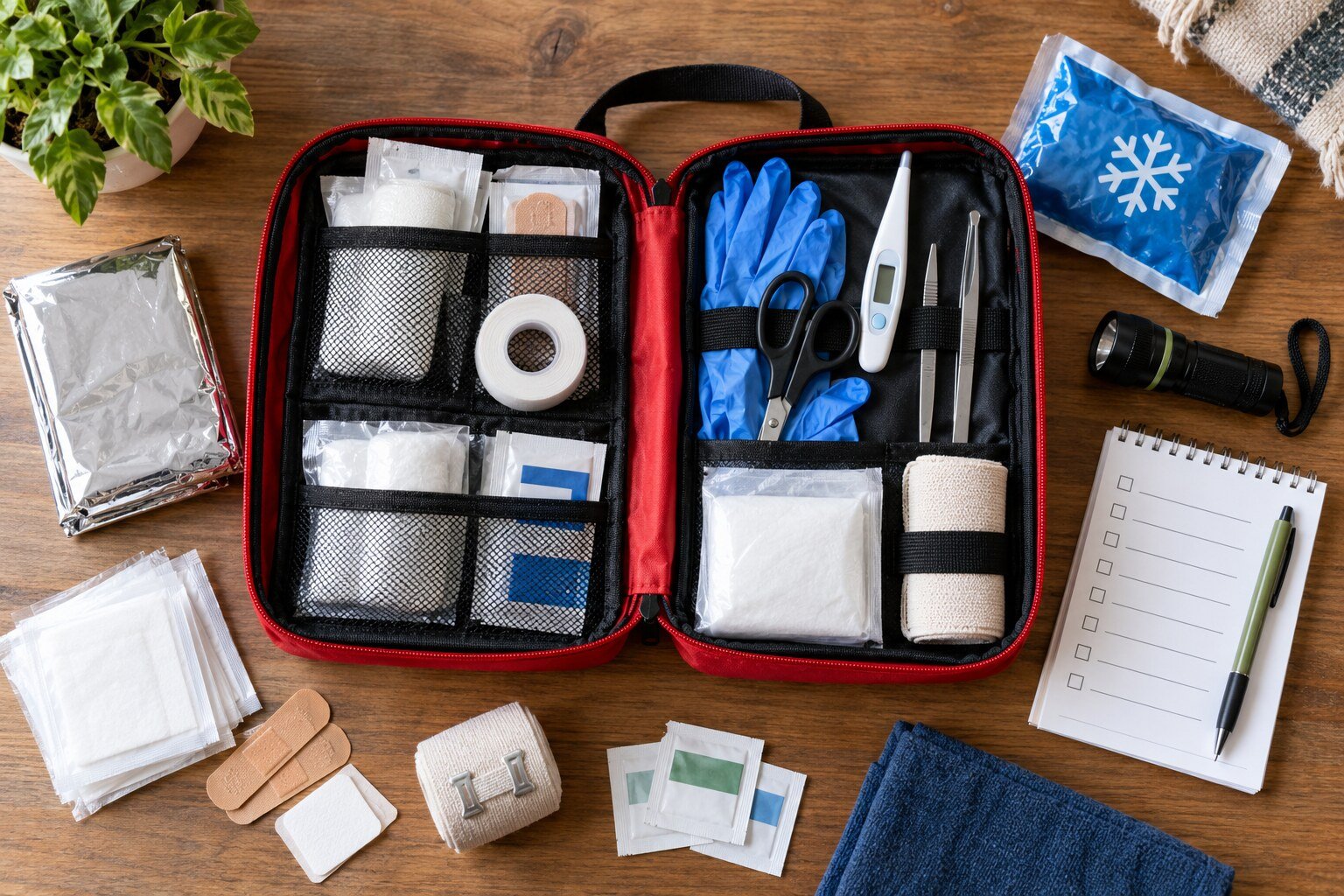
A practical home first aid kit should include wound dressings, bandages, antiseptic supplies, gloves, basic tools, a cold pack, emergency instructions, and household-specific medicines or medical information.
Store it where adults can reach it quickly but young children cannot. Check it regularly and replace anything used, damaged, or expired.
Jump to a section
A first aid kit is one of those household items that feels complete until you actually need it. You open the box and find twenty tiny bandages, dried-out wipes, blunt scissors, and medicine that expired two years ago.
A useful home kit does not need to look like a miniature hospital. It needs enough reliable supplies for common cuts, burns, sprains, splinters, and minor illnesses—plus a simple plan for getting professional help when the situation is more serious.
This checklist is based on current guidance from the American Red Cross and general emergency-preparedness recommendations. It is educational and does not replace first aid training or advice from a qualified medical professional.
Home First Aid Kit Checklist
| Category | Useful supplies | Purpose |
|---|---|---|
| Wound care | Adhesive bandages, sterile gauze, roller bandage, tape | Covering minor wounds and holding dressings |
| Protection | Non-latex gloves, breathing barrier | Reducing contact with blood and body fluids |
| Tools | Scissors, tweezers, thermometer | Cutting dressings and handling simple tasks |
| Comfort | Cold pack, emergency blanket | Supporting minor injuries and warmth |
| Information | First aid guide, emergency contacts, medical notes | Helping people act clearly under stress |
1. Bandages and Dressings
Pre-made kits often advertise their total “piece count,” but that number can be misleading. A box containing dozens of nearly identical small bandages may sound impressive while leaving you short of the supplies needed for a larger scrape or cut.
Build variety instead. Include adhesive bandages in several sizes, sterile gauze pads, at least one larger absorbent dressing, a roller bandage, and medical tape. A triangular bandage is also useful because it can support an injured arm or help secure a dressing.
- Assorted adhesive bandages
- Sterile gauze pads in small and larger sizes
- One or more absorbent compress dressings
- Roller bandage
- Triangular bandage
- Medical adhesive tape
Keep everything sealed until needed. If a sterile package is torn, wet, or dirty, replace it.
2. Cleaning and Wound-Care Supplies
Your kit should make it easy to clean your hands, protect yourself, and cover a minor wound. Add antiseptic wipes, soap or hand sanitizer, and individually packaged wound-care products recommended by your healthcare provider.
A small bottle of clean water or sterile saline can be useful for rinsing, especially in a portable kit. At home, the safest approach for a wound depends on the injury, so use current first aid guidance rather than pouring random household chemicals onto damaged skin.
- Antiseptic wipes
- Hand sanitizer
- Sterile saline or wound-wash solution
- Antibiotic ointment packets, if appropriate for your household
- Hydrocortisone packets for minor itching, if appropriate
3. Gloves and Personal Protection
Disposable gloves are easy to overlook, but they protect both the injured person and the helper. The Red Cross recommends non-latex gloves, which avoid the latex-allergy issue. Store more than one pair because a glove can tear or more than one person may need to help.
A CPR breathing barrier is another compact addition. The item is most useful when someone knows how to use it, which is one reason a first aid or CPR course can be more valuable than simply buying more supplies.
- At least two pairs of non-latex disposable gloves
- CPR breathing barrier with a one-way valve
- Face masks for dusty or crowded emergency conditions
4. Basic First Aid Tools
Choose tools that work reliably instead of miniature versions that are difficult to hold. Blunt-tip scissors can cut tape, gauze, or clothing around an injury. Tweezers can help with visible splinters, and a digital thermometer provides more useful information than guessing whether someone has a fever.
- Blunt-tip medical scissors
- Tweezers
- Digital thermometer with working batteries
- Safety pins
- Small flashlight or headlamp
- Notepad and permanent marker
The flashlight matters during a blackout. If your household is preparing for longer electrical disruptions, pair this kit with our family power-outage checklist.
5. Cold, Heat, and Comfort Items
An instant cold pack is useful when ice is not available. An emergency blanket is compact and can help retain body heat while waiting for assistance. Add a clean towel or small cloth, but do not pack so much that the essential items become difficult to find.
- Instant cold pack
- Emergency blanket
- Clean cloth or small towel
- Sterile non-adherent dressings
For a thermal burn, cooling with cool, clean running water comes before a dressing. Do not use ice or greasy creams. Follow the Red Cross burn guidance and seek urgent care for serious burns.
6. Medicines and Personal Medical Needs
This section must be customized. A generic list cannot account for allergies, pregnancy, age, medical conditions, drug interactions, or the needs of individual family members.
Consider commonly used over-the-counter medicines that your healthcare professional says are appropriate for your household. Keep them in their original labeled packaging, follow storage instructions, and check expiration dates. Never give aspirin to a child or teenager unless a qualified healthcare professional specifically directs it.
Prescription medicines require more careful planning. Do not transfer unidentified pills into the kit. Keep an updated medication list that includes names, doses, allergies, medical conditions, doctors, and emergency contacts. Ask your pharmacist or clinician how to prepare a safe emergency supply.
7. Family-Specific Additions
A kit should reflect the people who live in the home. Families with babies or young children may need child-sized bandages, a child-appropriate thermometer, and medicines approved for the child’s age and weight. Older adults may need spare hearing-aid batteries, written medical details, or easy-open packaging.
Also consider:
- Emergency contact cards for every family member
- Copies of important medical information
- Spare glasses or contact-lens supplies
- Personal allergy treatments prescribed by a clinician
- Pet first aid supplies stored separately and labeled clearly
Your first aid supplies are only one part of a complete household setup. Use our guide to the best emergency kits for families to check water, food, lighting, communication, and other essentials.
Where Should You Keep a Home First Aid Kit?
Choose a dry, easy-to-remember location that adults and responsible older children can reach quickly. Keep the kit away from excessive heat, moisture, and direct sunlight. A bathroom may feel convenient, but regular humidity can be hard on packaging and medicines.
If the home has multiple floors, consider a basic kit on each level. A second compact kit belongs in the car or evacuation bag, but medicines should not be left in a vehicle if heat or cold would damage them.
Everyone in the household should know where the kit is. Young children, however, should not be able to reach medicines, sharp tools, or hazardous supplies.
How Often Should You Check It?
Review the kit every few months and after every use. A recurring phone reminder makes this easy. During the check:
- Replace used, expired, damaged, wet, or opened items
- Confirm batteries still work
- Update medication lists and emergency contacts
- Make sure gloves and adhesive products have not degraded
- Return every item to its labeled section
Do not wait for every item to expire on the same day. Replace supplies gradually so the cost stays manageable.
Organize the Kit So It Works Under Stress
A crowded container can slow you down. Divide supplies into clear bags or labeled sections such as “bleeding,” “minor wounds,” “tools,” “medicines,” and “personal protection.” Put gloves near the top so they can be reached before touching an injury.
Keep a printed first aid guide inside. Phones lose power, screens break, and internet service can fail. A short paper guide does not replace training, but it is more dependable than relying entirely on a search during an emergency.
When a First Aid Kit Is Not Enough
Call local emergency services for severe bleeding, trouble breathing, chest pain, loss of consciousness, suspected poisoning, major burns, serious head or spine injuries, or any condition that appears life-threatening. Do not delay professional care because you have supplies nearby.
Learn the emergency number used where you live and save poison-control or toxicology contact information appropriate to your country. First aid training helps people recognize emergencies and use equipment correctly; the kit itself cannot provide that judgment.
Build or Buy?
A pre-made kit is convenient and gives you a usable foundation. A self-built kit offers more control over quantities, quality, and family-specific needs. The practical answer is often both: buy a solid base kit, then replace weak tools and add the personal items your household actually requires.
Our family first aid kit comparison covers ready-made options. Use this checklist to inspect any kit you are considering. Ignore inflated piece counts and look at the actual variety, size, quality, and expiration dates of the supplies.
Final Checklist
- Bandages and sterile dressings in useful sizes
- Medical tape and roller bandage
- Antiseptic and hand-cleaning supplies
- Multiple pairs of non-latex gloves
- Scissors, tweezers, thermometer, and flashlight
- Cold pack and emergency blanket
- Appropriate medicines in original packaging
- Personal medical information and emergency contacts
- A printed first aid guide
- A regular inspection and replacement schedule
The goal is not to prepare for every medical situation at home. It is to handle minor problems calmly, protect the person giving help, and recognize when professional care is needed.
Sources: American Red Cross: Make a First Aid Kit and Ready.gov: Build a Kit.