Best Emergency Radios for Power Outages in 2026: 4 Practical Picks
Four practical emergency radios for blackouts and severe weather, compared by alerts, power options, durability, portability, and real-world limitations.
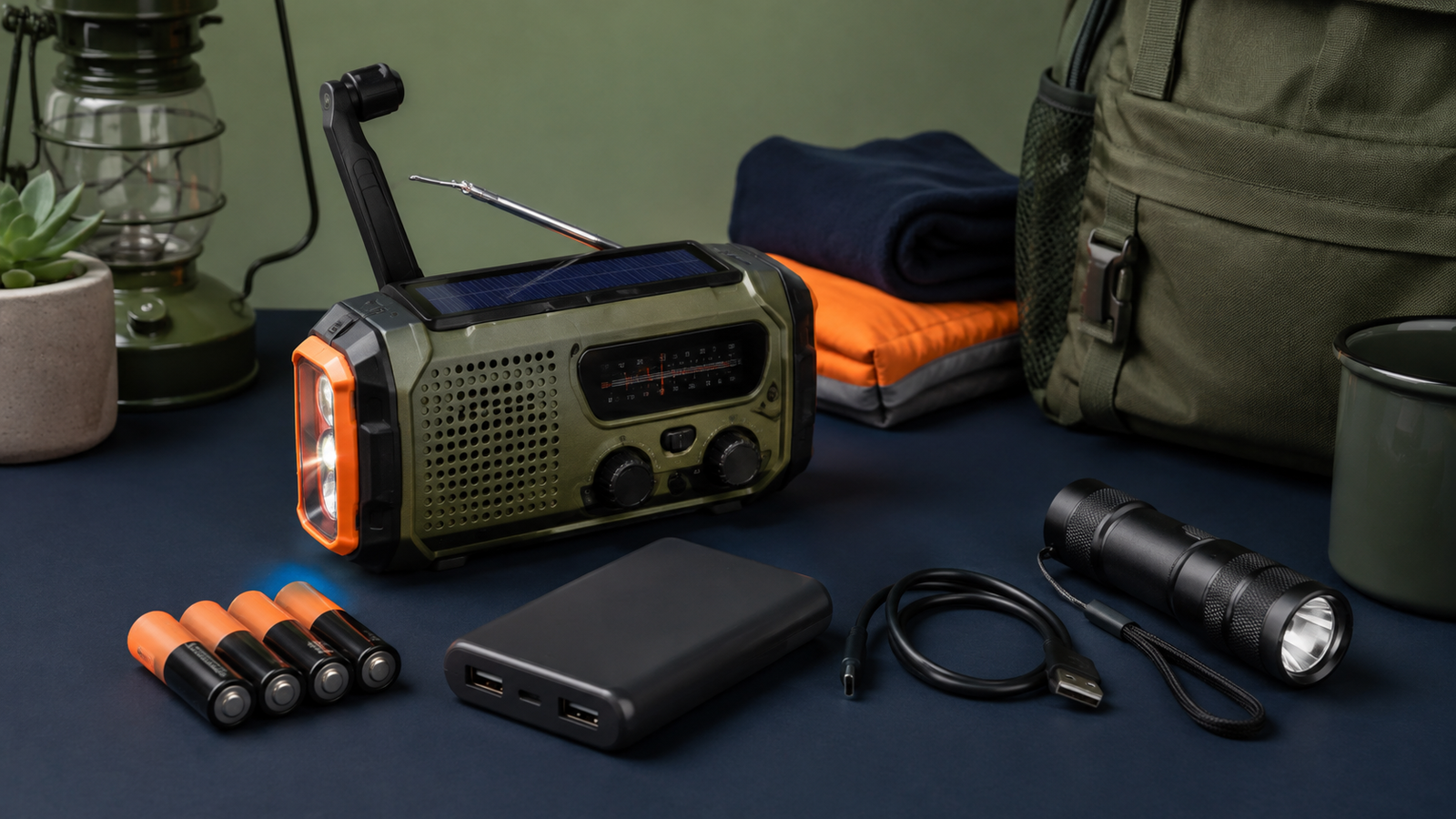
Coverage note: These recommendations focus on US NOAA weather reception. Outside the United States, check your local emergency broadcast system and frequencies before buying.
Quick answer: For most households, the Midland ER310 strikes the best balance. It has NOAA weather alerts, several ways to power it, strong published battery life, a bright flashlight, and ordinary AA batteries as a backup. The FosPower A1 makes more sense on a tight budget, while the tougher Sangean MMR-99 is aimed at people who genuinely want its extra features.
An emergency radio earns its place in a kit when the usual channels stop working. If mobile service, Wi-Fi, or television goes down, it can still bring you local warnings and instructions. NOAA Weather Radio carries official warnings, watches, forecasts, and other hazard information around the clock, which is why Ready.gov and the American Red Cross recommend a battery-powered or hand-crank radio.
How we evaluated these radios: We checked current manufacturer specifications, emergency features, portability, and official preparedness guidance. We did not conduct laboratory testing, and no brand paid for placement. Prices, availability, and specifications can change.
Jump to a section
Our quick picks
| Radio | Best for | Main strength | Important limitation |
|---|---|---|---|
| Midland ER310 | Best overall | Strong balance of alerts, battery options, light, and portability | Solar charging is mainly for extending a charge, not quickly restoring an empty battery |
| FosPower A1 | Best budget option | Compact, affordable, and easy to keep in a basic emergency kit | Small power bank and simpler controls |
| Sangean MMR-99 | Best rugged premium option | IP55 rating, digital tuning, weather alerts, and substantial audio features | Heavier and more expensive than most people need |
| Eton Odyssey | Best for extra features | Multiple power sources, Bluetooth, lighting, and stronger phone-charging output | Added features can consume power and may be unnecessary in a basic kit |
1. Midland ER310: best emergency radio for most households
The Midland ER310 is the easiest model here to recommend for both a home kit and an evacuation bag. It can run from its rechargeable lithium-ion battery, six AA batteries, the hand crank, or the small solar panel. Midland rates the current 3,500 mAh battery for up to 45 hours of normal use.
The radio receives NOAA Weather Radio and can sound an alert when a warning is issued on the selected local channel. It also includes a 1,400-lux LED flashlight with high and low settings, an SOS beacon, and an ultrasonic dog whistle intended to help search-and-rescue teams locate someone.
Why we like it
- NOAA weather reception with alert functionality
- Rechargeable battery plus hand crank, solar panel, and AA backup
- Bright flashlight with an energy-saving low setting
- Useful size for both home storage and evacuation
- Published battery life that is stronger than many inexpensive competitors
What to know before buying
Midland states that the solar panel is designed mainly to extend an existing charge. It is not a fast way to refill a depleted battery. The manufacturer also warns that the radio’s emergency USB output may not reliably charge newer high-draw phones. Treat phone charging as a last-resort bonus, not a replacement for a dedicated power bank.
Best for: Most families that want one dependable radio for storms, blackouts, and evacuation.
2. FosPower A1: best budget emergency radio
The FosPower A1 covers the essential categories at a lower cost. FosPower’s published A1 specifications list AM, FM, and NOAA weather-band reception; solar, hand-crank, USB, and AAA-battery power options; a 7,400 mWh (2,000 mAh) power bank; an LED flashlight; a reading light; and an SOS alarm.
Its strongest advantage is simplicity. You can place it in a basic emergency kit without spending premium-radio money, and the AAA-battery option gives you a straightforward backup when the rechargeable battery runs down.
Why we like it
- Low-cost entry point for a first emergency radio
- Multiple charging and battery options
- Flashlight and reading light in one compact device
- NOAA weather-band reception alongside AM and FM
What to know before buying
The A1 listing describes weather-band reception but does not establish automatic weather-alert functionality. Do not assume it will wake you for warnings; its SOS siren is a separate manual feature. The 2,000 mAh power bank is small by modern phone standards. It may provide an emergency boost, but it should not be your family’s main charging plan. The controls and tuning are also more basic than those on premium digital radios.
Best for: Apartments, dorms, cars, or households building a preparedness kit on a tight budget.
3. Sangean MMR-99: best rugged premium emergency radio
The Sangean MMR-99 FCC model is a larger, more sophisticated radio. Sangean lists AM/FM-RDS, Bluetooth, AUX input, seven NOAA weather channels, weather alerts, digital tuning, station presets, USB-C input, hand-crank and solar charging, and a replaceable-style 18650 lithium battery rated at 2,600 mAh.
Its IP55 rating provides meaningful resistance to dust and water, while reinforced corners add protection from bumps. It also includes several flashlight modes, an emergency buzzer, a 1.5-watt speaker, and USB output for charging a smaller device.
Why we like it
- IP55-rated construction for harsher conditions
- Digital tuning and station memory
- Weather alerts on all seven NOAA channels
- USB-C charging and a manufacturer-specified 18650 battery
- Better audio and controls than most compact crank radios
What to know before buying
Use only a replacement battery approved for this model; sharing an 18650 size does not establish compatibility. At roughly 1.98 pounds according to the manufacturer, the MMR-99 is much heavier than a minimalist pocket radio. Bluetooth, a larger speaker, and display features are pleasant during a long outage, but they also add cost and can use valuable battery power.
Best for: Buyers who prioritize rugged construction, digital controls, and better everyday usability over minimum weight.
4. Eton Odyssey: best emergency radio for extra features
The Eton Odyssey combines a digital weather radio with features that make it useful before and after an outage. Eton lists a display and alarm clock, Bluetooth, AUX input, a headphone jack, a built-in solar panel, hand-turbine charging, USB-C charging, and AAA-battery backup.
It is also described as splashproof and includes an LED flashlight, glow-in-the-dark locator, red emergency beacon, and a 5V/2.1A USB output for a phone or tablet. That higher-output port is appealing if emergency device charging matters to you, although a separate charged power bank remains the safer primary plan.
Why we like it
- Four practical power paths, including replaceable AAA batteries
- Weather radio, lighting, and emergency beacon
- Bluetooth and AUX input for normal use
- Stronger published USB charging output than many small crank radios
What to know before buying
This is a feature-rich option, not the simplest option. During an outage, turn off Bluetooth and avoid unnecessary lighting to conserve energy. Buyers who only need weather information and a flashlight may get better value from a simpler radio.
Best for: Households that want a radio they can use regularly as well as during emergencies.
What matters most when choosing an emergency radio
NOAA reception and alert mode
A weather-band radio lets you tune to NOAA broadcasts. An alert-capable radio can sound when an emergency message is transmitted, even when you are not actively listening. That distinction matters overnight or when a storm develops quickly. For an always-on home unit, consider a dedicated SAME-capable weather alert radio that can be programmed for your area.
More than one power source
Look for a rechargeable battery plus at least one replaceable-battery option. A crank is useful after stored batteries are exhausted, but cranking takes effort and produces limited energy. A small solar panel is helpful for maintenance and slow charging, not as your only power plan.
Simple controls
A radio is only useful if everyone in the household can operate it under stress. Clearly label your local NOAA frequency, store the manual with the radio, and practice switching between the rechargeable battery and backup batteries.
Realistic phone charging
Small radio power banks are designed for emergency communication, not repeated full phone charges. Keep one or more dedicated power banks charged, use low-power mode, reduce screen brightness, and reserve the radio’s USB output for a final backup.
Water resistance and portability
A home radio can be larger and easier to hear. A go-bag radio should be compact, easy to carry, and protected from rain. Match the radio to where you will actually store and use it.
Our practical recommendation
If you want one straightforward recommendation, buy the Midland ER310, add six good AA batteries, and keep a separate charged power bank beside it. The FosPower A1 is a reasonable starting point when money is tight. The Sangean MMR-99 earns its higher price only if rugged construction and better controls matter to you, while the Eton Odyssey is most worthwhile when its everyday audio features will actually be used.
Whatever you buy, take it out of the box before you need it. Charge it, find your local weather channel, test the alert and flashlight, label any confusing controls, and make sure someone else in the household can operate it too.
Emergency radio setup checklist
- Charge the internal battery before storing the radio.
- Keep compatible backup batteries ready and follow the manual’s battery-storage instructions.
- Find and label your strongest local NOAA frequency.
- Test reception, any supported alert mode, flashlight, crank, and USB output.
- Store the charging cable and printed manual with the radio.
- Add a dedicated power bank and compatible phone cable.
- Recheck the radio regularly and after every use.
Frequently asked questions
Can I rely on my phone instead of an emergency radio?
No single device should be your only source of information. Phones are valuable, but cellular networks can be congested or unavailable, and batteries run down. A radio adds an independent way to receive official local information.
Will a hand crank fully charge my phone?
Usually not in a practical amount of time. Cranking is better for producing enough power to listen to a broadcast or make a brief emergency charge. Use a dedicated power bank for normal phone charging.
Does the solar panel work indoors?
Indoor light generally provides very little charging power. Even outdoors, the small panel on most radios charges slowly. Fully charge by USB before an emergency and use solar as a supplemental option.
Do NOAA weather radios work outside the United States?
NOAA Weather Radio serves the United States and certain territories and coastal waters. Buyers elsewhere should choose a receiver compatible with their country’s emergency broadcast system and local frequencies.
How often should I test an emergency radio?
A quick monthly check is a practical habit. Confirm reception, inspect the batteries, test the light, and recharge the internal battery according to the manufacturer’s instructions.
Build the rest of your kit
Pair your radio with a paper contact list and our family power-outage checklist so everyone knows what to do with the information they hear.
A radio is one part of a complete preparedness plan. See our guide to the best emergency kits for families for water, food, first aid, lighting, documents, and other essentials.