How to Make Water Safe to Drink in an Emergency
Learn when to boil, disinfect, or filter emergency water, what each method can and cannot remove, and how to store treated water safely.
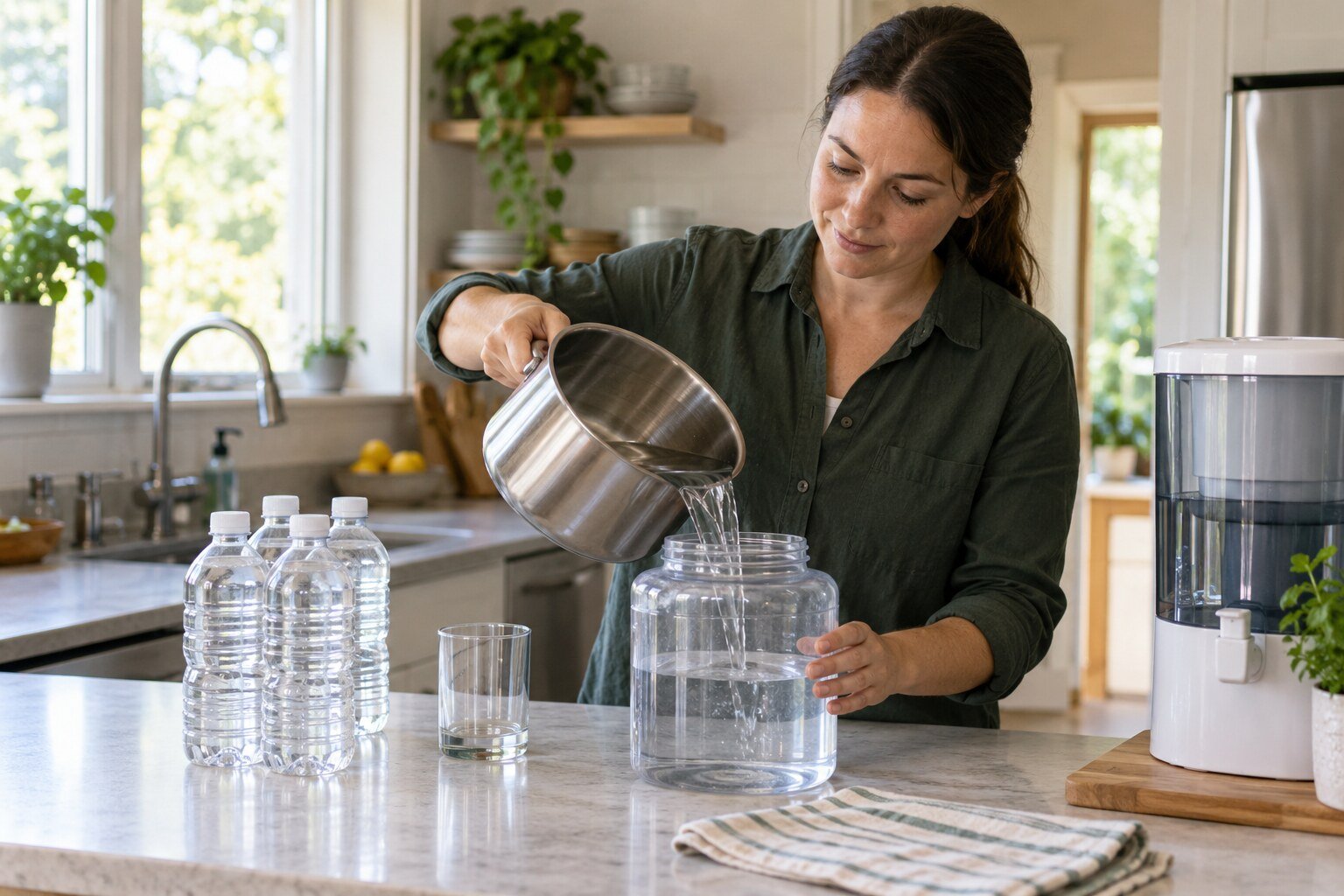
The Short Answer
Boiling is the most reliable household method for killing disease-causing germs in water.
Bring clear water to a rolling boil for 1 minute. At elevations above 6,500 feet, boil it for 3 minutes. Let it cool naturally, then store it in a clean, sanitized container with a tight cover.
Check the hazard first: boiling and disinfection cannot make water containing fuel, toxic chemicals, or radioactive material safe. Use an approved alternative source and follow your local advisory.
Jump to a section
Plan your stored supply: Use our emergency water supply calculator for totals in US gallons and liters, pet and extra allowances, and a printable storage checklist.
A water warning can turn an ordinary day into a confusing one. The tap may still run, yet you may not know whether it is safe for drinking, cooking, brushing teeth, or preparing a bottle.
The safest response is not to guess. Start with instructions from your local water utility or public-health authority, use sealed bottled water when it is available, and treat water only when the situation calls for it.
First, Find Out What Kind of Water Emergency You Have
Not every water notice means the same thing. Your local authority may issue a boil-water advisory because germs could be present. In another situation, officials may say not to drink or not to use the water because fuel, chemicals, toxins, or radioactive material may be involved.
This difference matters. Boiling, household disinfectants, and ordinary filters can help with many germs. They do not reliably remove every chemical or toxin. Boiling chemically contaminated water can even concentrate some contaminants as water evaporates.
Do Not Treat and Drink Chemically Contaminated Water
If officials say the water contains—or may contain—fuel, toxic chemicals, radioactive material, or harmful algal toxins, use another approved source. Follow the exact local notice rather than relying on boiling, bleach, or a household filter.
Use the Safest Available Water Source
During an advisory, use sources in this order whenever possible:
- Sealed commercial bottled water.
- Water stored safely before the emergency.
- Water from a source specifically approved by local authorities.
- Water you treat according to current official instructions.
If you have not built a reserve yet, our guide to how much emergency water your family should store gives you a simple three-day starting point and a gradual path toward two weeks.
How to Boil Water Safely
According to CDC emergency-water guidance, boiling is the best method for killing germs when you do not have safe bottled water.
- If the water is cloudy, pass it through a clean cloth, paper towel, or coffee filter. You can also let particles settle and carefully pour the clearer water into another clean container.
- Bring the clear water to a full rolling boil.
- Keep it boiling for 1 minute. Above 6,500 feet, boil for 3 minutes.
- Turn off the heat and allow the water to cool naturally.
- Pour it into a clean, sanitized container with a tight cover.
Do not add ice unless you know the ice was made from safe water. To improve the flat taste of boiled water, the CDC suggests pouring it from one clean container to another and allowing it to stand for a few hours.
When Boiling Is Not Possible
If you cannot boil water, an appropriate chemical disinfectant may kill many—but not all—disease-causing organisms. The amount depends on the disinfectant and its concentration, which is why an old “drops per gallon” rule copied from memory can be dangerous.
Use only a product and dose listed in current CDC or EPA emergency instructions. For household bleach, that generally means regular, unscented chlorine bleach suitable for disinfection. Do not use scented, splashless, color-safe, non-chlorine, or cleaner-added products.
A Safer Bleach Rule
Read the sodium-hypochlorite percentage on the label, then use the matching amount in the current EPA emergency-disinfection table. If the percentage is missing or the product has additives, do not improvise. Follow the complete instructions, including mixing and contact time: the EPA calls for stirring and waiting 30 minutes. If there is no slight chlorine odor, its instructions call for repeating the dose and waiting another 15 minutes. This timing applies to that bleach method, not to every treatment tablet or disinfectant.
Keep disinfectants away from children, follow the label, measure carefully, and never mix bleach with ammonia, vinegar, or any other cleaner. Chemical disinfection is not reliable against every parasite and will not remove toxic chemicals.
Can a Water Filter Make Emergency Water Safe?
Sometimes—but the word “filter” covers very different products. A pitcher designed mainly to improve taste is not the same as a filter tested to remove bacteria, protozoa, or viruses. No single portable filter removes every hazard.
Before relying on a filter, check the manufacturer’s independent testing claims and identify exactly what it is designed to reduce. Pore size matters, but so do the test standard, maintenance schedule, flow rate, and condition of the cartridge.
- A filter may remove some parasites and bacteria but allow viruses through.
- Some filters improve taste or reduce selected chemicals but are not microbiological purifiers.
- A cracked, frozen, expired, or incorrectly installed cartridge may not work as intended.
- Very cloudy water can clog a filter quickly, so pre-filtering sediment may help.
During a boil-water advisory, follow the boiling instruction even if the water has passed through a household filter. CDC emergency guidance also recommends disinfection after portable filtration to address germs the filter may miss, including viruses. Follow the disinfectant label and official instructions; a filter alone is not a universal guarantee.
Water Treatment Methods at a Glance
| Method | Useful for | Important limit |
|---|---|---|
| Boiling | Killing germs | Does not remove fuel, toxic chemicals, or radioactive material |
| Chemical disinfection | Many germs when boiling is unavailable | Dose depends on product strength; less effective against some parasites |
| Portable filter | Contaminants named in that model’s tested claims | Many filters do not remove viruses or chemicals |
| Sealed bottled water | Immediate drinking and food preparation | Supply is limited, so protect it from heat, damage, and contamination |
What Should Treated Water Be Used For?
Follow the local advisory, because the rules can vary. During a typical boil-water advisory, safe bottled or properly treated water may be needed for:
- Drinking and making beverages.
- Cooking and washing produce.
- Brushing teeth.
- Making ice.
- Preparing infant formula.
- Giving water to pets.
- Taking medicines.
Infants, people who are pregnant, older adults, and anyone with a weakened immune system or medical condition may need extra care. Follow local health advice and the person’s medical guidance.
How to Keep Treated Water Clean
Treatment does not help if clean water is placed back into a dirty container. Use food-grade containers that can be tightly closed. Wash and sanitize them according to official guidance, and avoid touching the inside of the lid or opening.
Label the container “drinking water” and include the treatment date. Store it in a cool place away from sunlight, fuel, pesticides, cleaners, and other chemicals. Pour from the container instead of dipping cups or hands into it.
For a broader household setup—including lighting, communication, first aid, and sanitation—see our guide to the best emergency kits for families.
Choose a container you can clean, close, and lift safely. Our emergency water-storage container comparison explains capacities, filled weights, and stacking limits.
Five Mistakes to Avoid
- Assuming clear water is safe. Germs and chemicals may be invisible.
- Boiling when officials say “do not use.” Local instructions take priority.
- Guessing a bleach dose. Product concentrations and formulations vary.
- Trusting an unnamed filter claim. Check what the exact model has been tested to remove.
- Recontaminating treated water. Clean hands, containers, lids, and utensils matter.
Prepare Your Household Water Plan
- Save your water utility’s alert page and phone number.
- Store at least three days of water for every person and pet.
- Keep one clean pot, a clean cloth or coffee filters, and food-grade containers available.
- Print or save the current CDC and EPA treatment instructions.
- Check the exact capabilities and replacement date of any household water filter.
- Make sure everyone knows that local “do not drink” or “do not use” instructions override the household plan.
A water interruption often happens alongside a storm or blackout. Our family power-outage checklist covers food safety, medical needs, communication, and generator precautions.
If space makes a ready-to-use reserve difficult, see our guide to storing emergency water in a small apartment for placement ideas and a simple storage map.
Frequently Asked Questions
How long should emergency water boil?
Bring clear water to a rolling boil for 1 minute. Above 6,500 feet, boil it for 3 minutes. Let it cool naturally before placing it in a clean, covered container.
Does boiling remove chemicals from water?
No. Boiling kills germs, but it does not reliably remove fuel, toxic chemicals, radioactive material, or harmful algal toxins. Use another approved water source when those hazards may be present.
Can I use pool water for drinking?
Do not assume pool or spa water can be made safe to drink. It may contain concentrated treatment chemicals and other contaminants. Follow local emergency guidance and use an approved source.
Is filtered tap water safe during a boil-water advisory?
Not automatically. Many household filters do not remove all disease-causing organisms. Follow the advisory; if it says to boil filtered water, boil it.
When can I use the tap again?
Wait until the issuing authority officially lifts the advisory. Then follow any flushing, ice-maker, filter-replacement, or appliance-cleaning instructions it provides.
Final Thoughts
Making water safer is less about owning a shelf full of gadgets and more about matching the response to the actual hazard. Listen to local authorities, use sealed or safely stored water first, and choose a treatment method only after you understand its limits.
A small reserve and a printed set of official instructions remove much of the uncertainty. Prepare those now, and a future advisory becomes a clear household task rather than a last-minute experiment.
Trusted Sources
- CDC: Water, Sanitation, and Hygiene Emergencies
- EPA: Emergency Disinfection of Drinking Water
- Ready.gov: Water
Before Things Fail provides general preparedness information. During a real water emergency, follow your local water utility, public-health agency, and emergency authorities.