Best Emergency Water Storage Containers in 2026: 4 Practical Picks
Compare four practical emergency water storage containers for families, including stackable, portable, rugged, and high-capacity options.
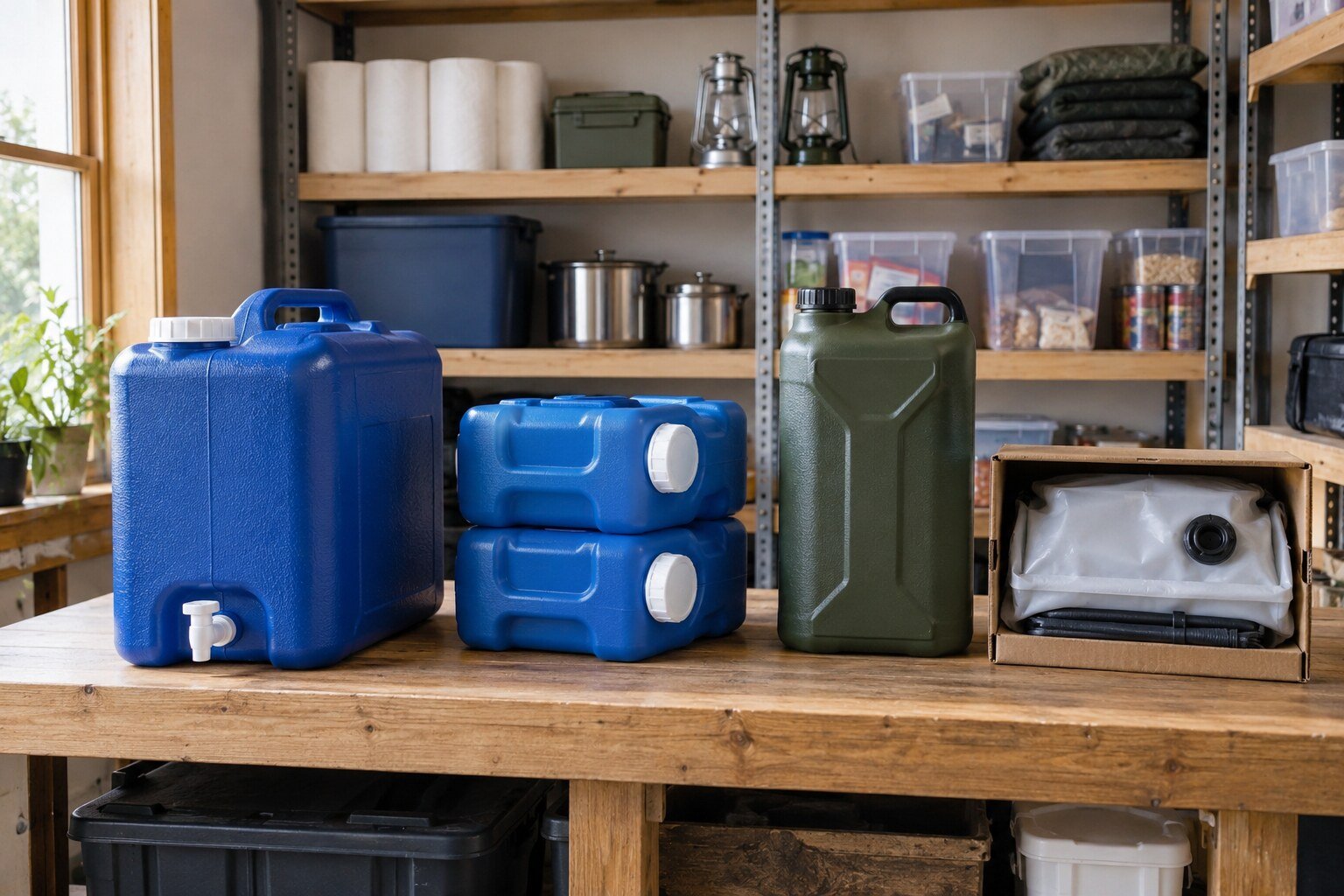
Our Quick Picks
- Best affordable all-rounder: Reliance Aqua-Tainer, 7 gallons
- Best stackable option: WaterBrick, 3.5 gallons
- Best rugged portable container: Scepter Water Container, 5 gallons
- Best high-capacity temporary backup: AquaPodKit bathtub bladder
Jump to a section
Work out your storage capacity: Use our emergency water supply calculator for totals in US gallons and liters, pet and extra allowances, and a printable storage checklist.
This comparison uses published specifications and household storage needs. We have not tested these containers ourselves. Check the exact model, accessories, current price, and manufacturer instructions before buying.
Emergency water storage sounds simple until you try to choose a container. A seven-gallon jug looks convenient, but it weighs close to 60 pounds when full. A large tank stores far more water, but it cannot be moved easily. Stackable containers save floor space, yet buying enough of them can become expensive.
The best choice is not one perfect container. It is the container—or combination of containers—that fits your available space, lifting ability, household size, and budget.
If you have not calculated your household target yet, start with our guide to how much emergency water your family should store. Once you know the number of gallons you need, the comparisons below will make much more sense.
Best Emergency Water Storage Containers at a Glance
| Container | Capacity | Best for | Main trade-off |
|---|---|---|---|
| Reliance Aqua-Tainer | 7 gallons | Affordable home storage | Heavy when full |
| WaterBrick | 3.5 gallons | Small spaces and stacking | Higher cost per gallon |
| Scepter Water Container | 5 gallons | Transport and rough handling | Premium price |
| AquaPodKit | Up to 65–100 gallons* | Filling before a storm or outage | Not a permanent reserve |
*Actual capacity depends on the model and the size and shape of the bathtub.
1. Reliance Aqua-Tainer — Best Affordable All-Rounder
The seven-gallon Aqua-Tainer is a sensible starting point for families who want a straightforward container without paying a premium. Its rectangular shape is easier to organize than round jugs, and the reversible spigot stores inside the cap during transport.
Seven gallons is enough to make meaningful progress toward a household reserve. It is also close to the upper limit of what many adults will comfortably lift: the water alone weighs about 58 pounds. That matters if the container must be carried down stairs or moved during an evacuation.
What we like
- Useful seven-gallon capacity at a generally accessible price
- Built-in spigot makes everyday dispensing easier
- Rectangular design uses shelf space efficiently
- Food-safe construction designed for drinking water
What to consider
- A full container may be too heavy for some family members
- Do not stack filled containers unless the instructions for your exact model explicitly permit it
- Like other plastic containers, it should be protected from heat and direct sunlight
Best for: Families building an affordable home reserve one container at a time.
2. WaterBrick — Best Stackable Option for Small Spaces
WaterBrick takes a different approach. Each standard container holds 3.5 gallons and is shaped to cross-stack like a building brick. The official dimensions are 18 by 9 by 6 inches, so individual containers can fit under beds, on sturdy shelving, or in other spaces where a tall jug may not work.
A full WaterBrick weighs roughly 32 pounds including the container. That is far easier for many people to manage than a seven-gallon jug. Smaller units also let you divide your supply: if one container leaks or becomes contaminated, the entire reserve is not affected.
What we like
- Cross-stackable design makes good use of limited space
- Manageable size and weight when filled
- Food-grade, BPA-free HDPE construction
- Wide opening simplifies filling and cleaning
What to consider
- Usually costs more per gallon than basic jugs
- You may need several units for a family-sized reserve
- The spigot is commonly sold separately or included only in certain bundles
Best for: Apartments, closets, under-bed storage, and households that prefer lighter containers.
3. Scepter 5-Gallon Water Container — Best Rugged Portable Pick
Scepter’s five-gallon container is the practical choice when durability and transport matter more than getting the lowest price. Its tall, narrow shape packs well in a vehicle, while the rugged food-grade construction is designed for camping, emergency management, and off-road use.
Five gallons of water weighs about 42 pounds, plus the container. That is still substantial, but it is more manageable than seven gallons for many adults. The slim profile and integrated handle also make it easier to carry without the container bumping against your legs.
What we like
- Rugged build for transport and repeated handling
- BPA-free, food-grade construction
- Five-gallon capacity balances usefulness and portability
- Tall, narrow shape works well in vehicles and tight storage areas
What to consider
- More expensive than many basic water jugs
- Pouring accessories and cap designs vary by model and retailer
- It is still too heavy for some people when completely full
Best for: Vehicle kits, camping, evacuation planning, and households that expect to move their water.
4. AquaPodKit — Best High-Capacity Temporary Backup
The AquaPodKit is not a replacement for water stored before an emergency. It is a large food-grade bladder that sits inside a clean bathtub and must be filled while the water supply is still working and confirmed safe to drink. A bladder stores water; it does not purify it. That makes it useful when a hurricane, major storm, or planned service interruption gives you advance warning.
Depending on the model and bathtub, it can hold roughly 65 to 100 gallons. That is a huge amount compared with portable containers, but there is an obvious limitation: once filled, it cannot be moved. The manufacturer also treats it as temporary emergency storage rather than a permanent reserve.
What we like
- Stores a large volume without requiring a permanent tank
- Uses bathtub space that would otherwise sit empty
- Food-grade, BPA-free material keeps water away from the tub surface
- Useful as an extra layer when an emergency is forecast
What to consider
- It only helps if you have time and running water to fill it
- It is not portable once filled
- It temporarily removes the bathtub from normal use
- It should supplement—not replace—your ready-to-use stored water
Best for: Households in storm-prone areas that want a high-capacity last-minute backup.
How We Chose These Containers
We did not rank these products by popularity alone. We compared manufacturer specifications and looked for options that solve different household problems. Our main criteria were:
- Food-safe materials: The container should be intended for potable water, not repurposed from chemicals or unknown contents.
- Practical filled weight: One gallon of water weighs about 8.34 pounds, so capacity directly affects portability.
- Storage efficiency: Shape, footprint, and safe stacking matter in real homes.
- Dispensing: A secure cap and usable spout or spigot reduce spills and contamination.
- Clear purpose: Each recommendation should be especially useful for a recognizable situation.
We have not claimed hands-on testing. Product designs and included accessories can change, so confirm the current specifications with the manufacturer or retailer before buying.
What Size Water Container Should You Buy?
For most families, a mix works better than a single size. Smaller containers are easier to lift and distribute, while larger containers reduce the number of units needed.
- 3 to 3.5 gallons: Easier for many adults to move and convenient for tight storage spaces.
- 5 gallons: A strong balance between capacity and portability.
- 7 gallons: Efficient and affordable, but heavy when filled.
- 55 gallons or more: Useful for stationary reserves, but requires serious planning for placement, filling, dispensing, and floor load.
A family of four needs at least 12 gallons for a basic three-day supply. That could mean four WaterBricks, three five-gallon containers, or two Aqua-Tainers. Storing a little more than the exact calculation gives you a margin for spills and unexpected needs.
Before buying containers for a small home, use our small-apartment water storage guide to measure suitable locations and plan an accessible layout.
Safety and Storage Tips
- Use only containers made for food or drinking-water storage.
- Never use a container that previously held toxic chemicals.
- Wash and sanitize refillable containers according to current public-health guidance.
- Store water in a cool place away from direct sunlight, gasoline, pesticides, and strong odors.
- Keep heavy containers on a stable surface where a leak would cause limited damage.
- Label containers with the filling date and follow the manufacturer’s care instructions.
If stored water becomes questionable during an emergency, read our practical guide on how to make water safer to drink. Remember that boiling and ordinary filters cannot make water contaminated by fuel, toxic chemicals, or radioactive material safe.
Replace water you fill yourself every six months; follow the package date for commercially bottled water. Before filling reusable containers, follow the CDC cleaning and sanitizing steps. Container-sanitizing solutions are not drinking-water treatment doses.
For limited storage space, see our apartment preparedness guide. Capacities and weight calculations here use US gallons; check the exact liter capacity on your container.
Our Verdict
The Reliance Aqua-Tainer is the easiest budget-friendly starting point for many families. Choose WaterBrick if space and filled weight are your biggest concerns. Choose the Scepter if you need a container that will be moved often. Keep an AquaPodKit as a high-capacity backup only when your likely emergencies provide time to fill it.
You do not need to buy your entire two-week supply today. Start with enough safe water for three days, store it correctly, and add capacity gradually. A modest reserve you can actually lift, inspect, and maintain is more useful than an impressive setup that does not fit your home.
Frequently Asked Questions
Are blue plastic water containers safe?
Color alone does not determine safety. Look for a container specifically made from food-grade material and intended for potable water. Follow the manufacturer’s instructions for cleaning, storage, and replacement.
Can emergency water containers be stored in a garage?
A garage may expose water to heat, freezing temperatures, fuel fumes, pesticides, and other chemicals. A cool indoor location away from hazardous substances is generally better. If the garage is your only option, control temperature where possible and keep water separated from chemicals and odors.
Can I stack filled water containers?
Only stack containers when the manufacturer explicitly says they can be stacked while filled, and follow its height and surface requirements. “Stackable” sometimes refers only to empty storage.
Is one large tank better than several small containers?
A large tank stores water efficiently, but it is immovable when filled and a single leak can affect the whole supply. Several smaller containers are easier to carry and provide redundancy. Many households benefit from combining both approaches.
Sources and product specifications: CDC emergency water guidance, Ready.gov water guidance, WaterBrick specifications, Scepter product information, and AquaPodKit FAQ.