How to Prepare for a Power Outage: A Practical Family Checklist
Prepare for a power outage with a family checklist covering supplies, food safety, medical needs, safe generator use, and steps for when power returns.
Quick Answer
- Keep flashlights where everyone can find them.
- Charge phones and power banks before severe weather.
- Store water, shelf-stable food, and essential medicines.
- Keep a battery or hand-crank emergency radio available.
- Write down important phone numbers.
- Install working smoke and carbon-monoxide alarms.
- Plan where to go if your home becomes dangerously hot or cold.
Jump to a section
Most power outages are brief and mostly annoying. The situation changes when the lights stay off for hours—or days. Food starts warming up, phones lose charge, electric medical equipment may stop working, and a home can become dangerously hot or cold.
You do not need a bunker or an expensive pile of gear to handle that well. A short family plan, a few dependable supplies, and clear roles can make those first hours much calmer.
1. Make a Simple Family Plan Before the Power Goes Out
Talk through the first few steps before an outage happens. The plan should be short enough for children and older relatives to remember without searching through a folder.
- Choose a meeting point: Pick one safe place inside the home and one nearby backup location.
- Create a contact plan: Write down family, utility, medical, and emergency numbers on paper. Phones can run out of battery.
- Identify a helper: Arrange a trusted friend, relative, or neighbor who can assist if someone depends on powered medical equipment or has mobility needs.
- Include pets: Store food, water, medication, a carrier or leash, and a recent photo.
- Know when to leave: Choose a safe heated or air-conditioned location you can reach if indoor temperatures become unsafe.
The American Red Cross recommends maintaining a support network and a paper contact list so family members can reconnect if separated.
2. Build a Practical Power Outage Kit
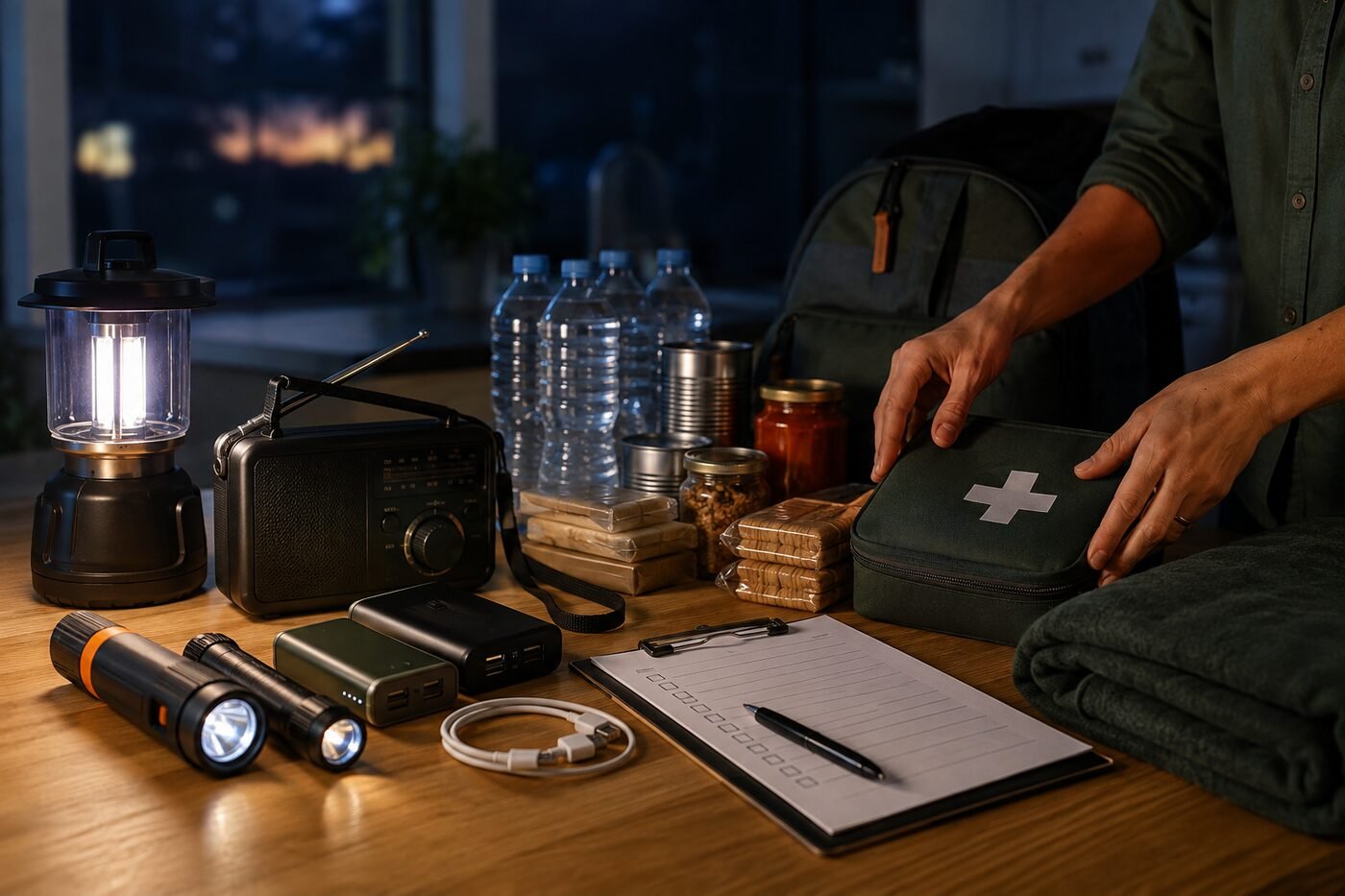
Gather the essentials in one easy-to-reach place. There is no need to buy everything in a single trip—start with what is already at home and fill the obvious gaps over time.
Lighting
- LED flashlights for adults
- Simple flashlights or headlamps for children
- LED lantern for a shared room
- Spare batteries in the correct sizes
Use flashlights instead of candles whenever possible. Open flames add an unnecessary fire risk when rooms are dark and people are moving around.
Communication and Charging
- Fully charged power banks and charging cables
- Car charger
- Battery-powered or hand-crank emergency radio
- Paper list of contacts and local radio frequencies
If you still need a dependable radio, see our guide to the best emergency radios for power outages.
Water, Food, and Daily Essentials
- Drinking water for every person and pet
- Shelf-stable foods your family already eats
- Manual can opener
- First-aid supplies and essential prescriptions
- Sanitation items, trash bags, and moist wipes
- Warm layers or cooling supplies for the season
- A small amount of cash
Build toward a deeper supply over time. The Red Cross advises storing nonperishable food and water for an extended outage. Our family emergency-kit guide can help you identify common gaps.
Use our water quantity guide, emergency pantry plan, and first aid checklist to check quantities and fill specific gaps.
3. Protect Medical and Accessibility Needs
For a household that depends on refrigerated medicine, powered mobility equipment, oxygen equipment, a CPAP machine, or another essential device, planning cannot wait until the lights go out. Speak with the healthcare provider and utility company in advance.
- Ask how long the device or medicine can safely be without normal power.
- Keep backup batteries charged and follow the manufacturer’s instructions.
- Learn whether your utility maintains a medical-needs registry.
- Identify an evacuation destination with reliable power.
- Keep a written medication and equipment list.
Do not guess about the safety of refrigerated medicine after an outage. Ask a pharmacist or healthcare professional.
4. Prepare Your Refrigerator and Freezer
Place appliance thermometers in the refrigerator and freezer. Keep reusable ice packs frozen, and know where you can obtain ice or a cooler during a longer outage.
When the power fails, keep appliance doors closed. According to federal food-safety guidance:
- An unopened refrigerator generally keeps food cold for about 4 hours.
- A full freezer generally holds a safe temperature for about 48 hours.
- A half-full freezer generally holds it for about 24 hours.
These are estimates, so use an appliance thermometer. Discard common perishables such as meat, milk, and leftovers after more than two hours at 40°F (4°C) or above; after four hours without power or another cold source, discard refrigerated perishables. The federal food-safety chart lists exceptions by food. Never taste food to test its safety.
5. What to Do When the Power Goes Out
Check immediate hazards first. Stay well away from fallen power lines and anything they touch, and report them to the utility or emergency services. Follow local evacuation instructions.
- Check whether the outage is local. Look outside safely, check the utility’s outage page, and report the outage if needed.
- Turn on flashlights. Keep one light at each occupied level of the home.
- Protect electronics. Unplug sensitive devices to reduce the risk of damage from a power surge. Leave one lamp switched on so you know when power returns.
- Preserve phone batteries. Lower screen brightness, use low-power mode, and avoid unnecessary video streaming.
- Keep cold air inside appliances. Open the refrigerator and freezer only when necessary.
- Follow official alerts. Use a radio, charged phone, or local alert system.
- Check on people. Contact older relatives, neighbors, and anyone with medical or mobility needs.
6. Generator and Carbon-Monoxide Safety
Critical safety rule: Never run a generator inside a house, basement, shed, or garage—even with doors or windows open.
Carbon monoxide is an invisible, odorless gas that can cause sudden illness or death. The CDC says portable generators should be operated outdoors, more than 20 feet from windows, doors, and vents. Direct the exhaust away from the home.
- Never use a charcoal grill or outdoor camp stove indoors.
- Never use a gas oven to heat the home.
- Use battery-powered or battery-backup carbon-monoxide alarms.
- Follow the generator manufacturer’s instructions.
- Have any permanent generator connection installed by a qualified electrician.
Possible carbon-monoxide poisoning symptoms include headache, dizziness, weakness, nausea, chest pain, and confusion. Move into fresh air and contact emergency services immediately if an alarm sounds or poisoning is suspected.
7. Manage Heat and Cold Safely
A home can become unsafe during extreme temperatures. Close blinds during hot weather, use one cooler room, reduce unnecessary activity, drink water, and relocate to a cooling center or powered location when necessary.
During cold weather, wear layers, gather in one insulated room, close curtains, and block drafts safely. Never improvise indoor heating with outdoor fuel-burning equipment.
Babies, older adults, pregnant people, and people with chronic conditions may need help sooner. Do not wait until symptoms become severe before relocating.
8. When the Power Returns
- Give the electrical system a few minutes before reconnecting major appliances.
- Check food temperatures and discard unsafe perishables.
- Stay at least 35 feet away from fallen power lines and anything they touch; report them to emergency services or the utility.
- Do not use wet or flooded electrical equipment until a qualified professional inspects it.
- Recharge batteries and power banks.
- Restock water, food, medicine, and batteries you used.
- Write down what worked and what your family still needs.
A 15-Minute Family Practice
Once or twice a year, practice for 15 minutes in a safe area. If you dim or switch off lights, keep essential medical equipment powered and leave safe lighting for anyone at risk of falling:
- Everyone finds a flashlight without using a phone light.
- One person locates the emergency radio.
- Another person reads the paper contact list.
- The family reviews generator and carbon-monoxide rules.
- You check battery dates and power-bank charge levels.
Fifteen minutes is enough to reveal the awkward details: a missing battery, a flashlight nobody can find, or a radio nobody knows how to tune.
Final Takeaway
Preparing for a blackout is less about owning everything and more about covering the basics well. Begin with lighting, communication, water, food, medical needs, and a plan for unsafe temperatures. After that, fix one weak spot at a time.
A household that knows what to do will usually cope better than one surrounded by unfamiliar gadgets. Keep the plan practical, practice it occasionally, and update the supplies as your family changes.
Trusted Sources
- American Red Cross: Power Outage Safety
- CDC: Carbon Monoxide Poisoning Basics
- FoodSafety.gov: Food Safety During a Power Outage
Before Things Fail provides general preparedness information, not medical or emergency-professional advice. Follow instructions from local authorities and contact emergency services when urgent help is needed.