Family Emergency Communication Plan: A Simple Guide and Checklist
Know who to contact and where to meet if your family is separated. Build a simple communication plan with sample messages and a checklist to copy.
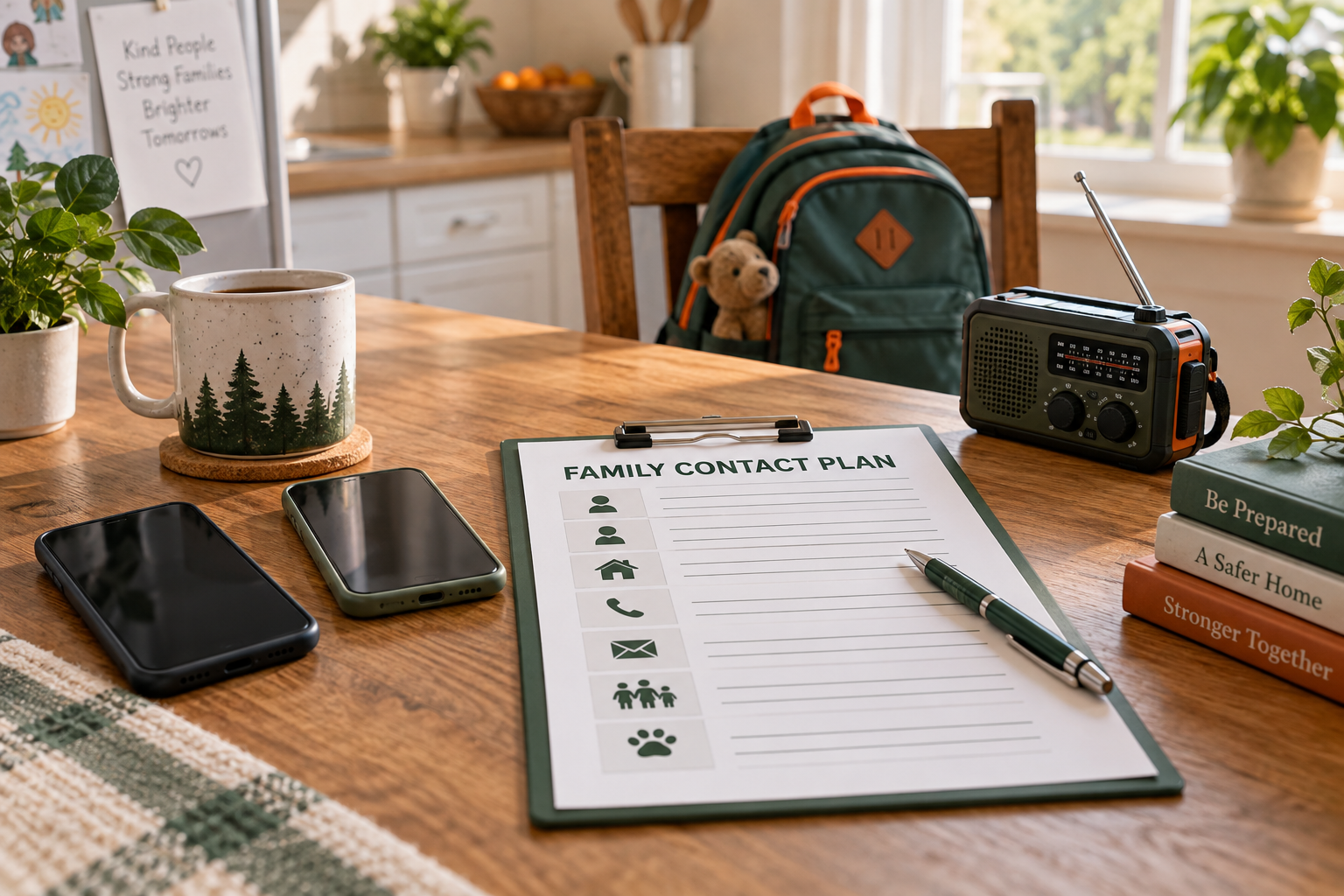
A family emergency communication plan answers three questions before anyone needs to ask them: who will we contact, what will we tell them, and where will we meet if we cannot reach each other?
You can start with a sheet of paper and the phones you already own. The goal is a plan that still makes sense when one person has a flat battery, another is at work, and a child is at school.
Start here: agree on an out-of-area contact, write down two meeting places, and give everyone a copy. Follow local emergency instructions before attempting to reunite. A family meeting place is never a reason to enter an unsafe area.
1. Choose one person everyone can contact
Ask a trusted friend or relative outside your local area to act as your household’s contact. Their job is to collect updates and pass them on, rather than have every family member repeatedly call everyone else. An out-of-area contact may be easier to reach when local communications are disrupted. Keep their number on paper as well as in your phone. Habitat for Humanity’s communication guidance recommends this approach.
Make the arrangement explicit. Ask, “If we are separated during an emergency, can everyone send you their location and status?” Pick a backup person too, in case the first person is unavailable. Share both contacts with the whole household.
2. Decide what your check-in message should say
For a routine family update during a disaster, try a short text instead of repeatedly calling. Texts may get through when calls cannot, but delivery is not guaranteed. Keep any necessary calls brief. These are family check-ins; if someone needs urgent emergency help, contact the appropriate emergency service. See FEMA’s family communication guide, hosted by Brevard County.
Here is an example message format you can adapt:
“Alex here. I’m safe at the office with Sam. Staying here for now. Next update at 4 p.m., if service allows.”
Include your name, location, who is with you, and what you intend to do next. If you move, send a new update when safe. A proposed check-in time helps organize communication, but a missed message does not, by itself, explain what has happened.
Agree on the same messaging method in advance. A family group chat is useful only if everyone knows how to open it. Do not assume a message marked “sent” has been read; ask for a brief acknowledgment when possible.
3. Write down two meeting places
The American Red Cross recommends a meeting place just outside your home for a sudden emergency and another outside your neighborhood if you cannot return home. Choose locations appropriate to the hazards in your area, and discuss how each person would reach them.
Be precise. “Near the park” leaves room for confusion. Write the named entrance, street address, or another unmistakable landmark. Check accessibility, transport needs, and whether pets can accompany you. Keep a backup destination for situations where the first is closed or unsafe.
For example, a household might identify a safe landmark outside its building and a relative’s home in another neighborhood. That is an illustration, not a recommendation for your specific location: flood zones, evacuation routes, and official instructions must shape your choices.
4. Include school, childcare, and care arrangements
Your household plan needs to fit the emergency procedures at school, childcare, and work. Ask how each organization will send updates, where it may relocate, and how reunification works. Identify who is authorized to collect children and keep those records current.
The Federal Alliance for Safe Homes recommends recording school and other important contacts, sharing copies, and considering access and functional needs when selecting meeting locations.
For a young child, the plan can be very simple: know which trusted adults can help, carry the agreed contact information, and follow the school’s instructions. Do not build a plan that expects a child to leave supervision and travel alone to a meeting point.
5. Keep a copy that does not need a battery
Write down essential numbers and addresses. Keep a copy in your emergency kit and give household members an appropriate paper copy for a wallet or bag. A saved contact is useful; a number you can read when your phone is unavailable is useful too. Habitat’s guide includes contact cards as part of family preparation.
Keep the information private. A contact sheet does not need banking details, account passwords, or identification numbers. Give it to the people who need it, rather than posting it publicly.
A simple family communication plan to copy
Copy this template into a document or onto paper. Fill it in together, then give everyone the same version.
- Plan updated: __________________
- Household members and phone numbers: __________________
- Out-of-area contact and number: __________________
- Backup contact and number: __________________
- Our first check-in method: __________________
- Our backup method: __________________
- Meeting place near home: __________________
- Meeting place outside the neighborhood: __________________
- Backup destination: __________________
- School or childcare contact and reunification instructions: __________________
- Authorized pickup adults: __________________
- Transport or assistance arrangements: __________________
- Where we receive official local alerts: __________________
Practice once, then fix what was unclear
Try a calm practice session: send a test message to your agreed contact, have everyone find their paper copy, and ask each person to explain the meeting places. Mark practice messages clearly so nobody mistakes them for an emergency.
Did someone need help finding the group chat? Did two people describe different entrances to the same building? Fix those details now. FEMA recommends reviewing, updating, and practicing the plan at least annually and whenever information changes. Replace old copies after changing numbers or arrangements.
Make this part of your wider household plan
Communication is one part of preparation. Our family power-outage checklist covers other household priorities. The emergency-radio guide can help you compare options for receiving information, while the apartment preparedness guide focuses on smaller homes.
Your first task: choose your out-of-area contact and ask whether they are willing to help. Then write down the plan together.
Sources
- American Red Cross, Make a Plan.
- FEMA, Family Emergency Communication Plan, hosted by Brevard County Government.
- Habitat for Humanity, Family communications plan.
- Federal Alliance for Safe Homes, Create a Family Emergency Communication Plan.
Sources checked September 13, 2026. Adapt this plan to your household and follow local emergency instructions.