Best Emergency Kits for Families in 2026: What You Actually Need
A calm, practical comparison of family emergency kits—and the essential supplies every household still needs to add.
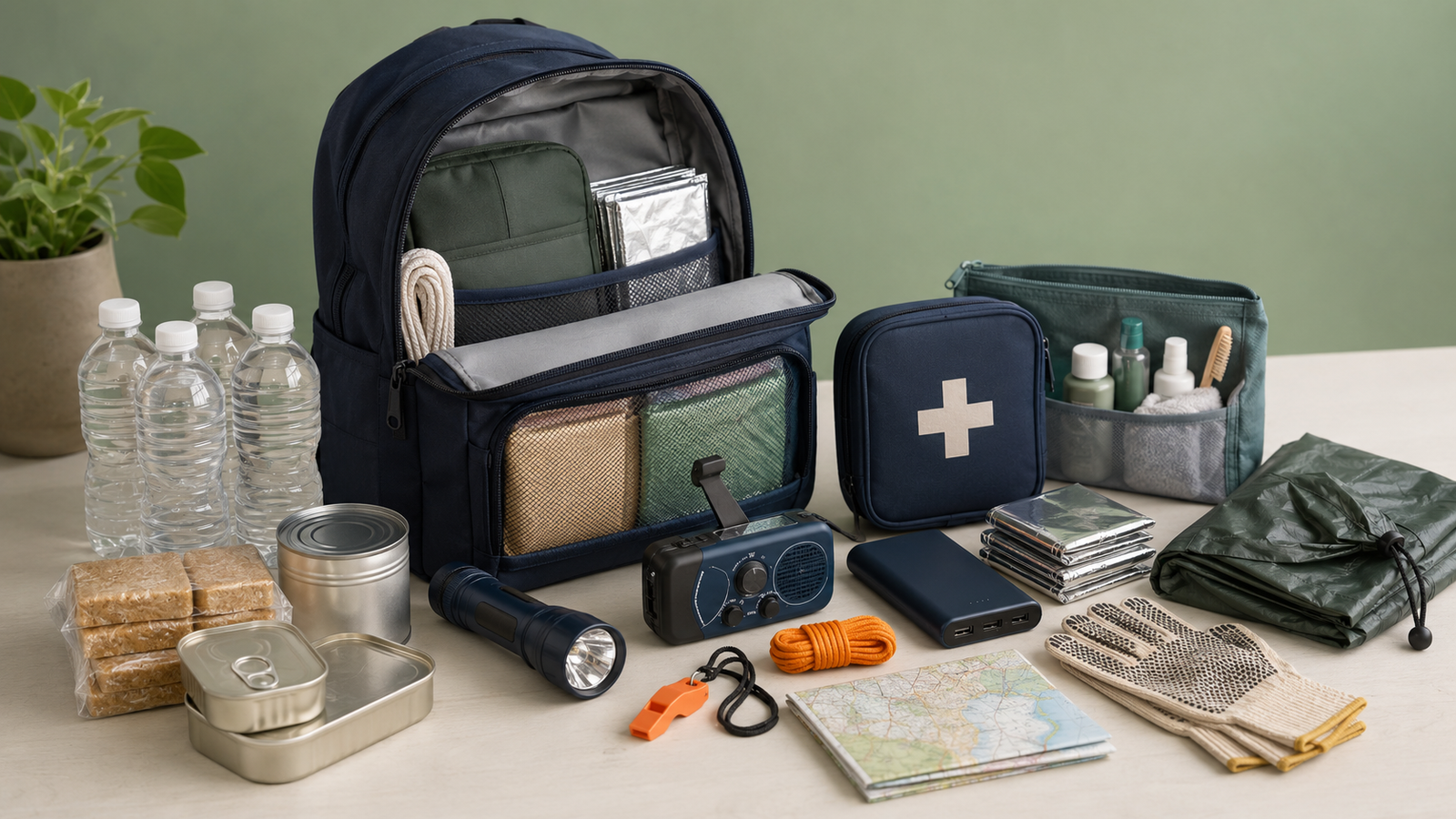
Quick answer: Most families do not need the fanciest emergency kit on the shelf. They need one they can actually carry, understand, and maintain. A solid prebuilt kit can save time, but it still needs to be opened and completed with your household’s water, medicines, documents, clothing, and personal supplies.
We compared three packaged kits and a customized approach for a family of four, paying attention to what is actually included, how easy each kit is to move, and what families would still need to add. The recommendations rely on current product information and official preparedness guidance—not paid placement or pretend hands-on testing.
Jump to a section
Our quick picks
| Kit | Best for | Main strength | Important limitation |
|---|---|---|---|
| Ready America 4-Person 3-Day Backpack | Best value starter | Portable, affordable, covers the basic categories | Included water is far below a full household supply |
| American Red Cross 4-Person 72-Hour Kit | Best organized premium kit | Strong hygiene, lighting, warmth, and first-aid coverage | Heavy and still needs substantially more water |
| Sustain Supply Comfort4 | Best comfort-focused option | Emphasizes food, water, tools, and real-world usability | Confirm the exact current contents before ordering |
| Hybrid DIY family kit | Best overall for most families | Customized to your risks, climate, children, pets, and health needs | Takes more planning and maintenance |
1. Ready America 4-Person 3-Day Backpack: best value starter
The Ready America 4-Person Emergency Kit is a straightforward grab-and-go starting point. The manufacturer currently lists four 2,400-calorie food bars, four one-liter water boxes, four ponchos, four survival blankets, a 107-piece first-aid kit, four 12-hour light sticks, masks, gloves, goggles, an emergency whistle, hygiene items, and a backpack.
Why we like it
- It covers food, water, warmth, basic first aid, light, hygiene, and personal protection in one bag.
- The backpack format makes it easier to move during an evacuation.
- Its simple contents make it a practical base kit for a family that is starting from zero.
What to add
The four liters of included water are far below the 12 US gallons (about 45 liters) in a basic three-day reserve for four people. The four 2,400-calorie bars provide 9,600 calories total: divided among four people over three days, that is only 800 calories per person per day. Plan additional food suited to each person’s needs. Add stored water at home, personal medications, a radio, phone power banks, copies of essential documents, spare clothing, and supplies for children or pets.
Best for: Families who want an affordable base kit and are willing to customize it immediately.
2. American Red Cross 4-Person 72-Hour Kit: best organized premium option
The American Red Cross kit takes a more comprehensive approach to organization and personal care. Its published contents include a heavy-duty backpack, four LED flashlights, a multi-tool, emergency food bars, water pouches, four portable water bags, ponchos, whistles, rescue blankets, hand warmers, masks, duct tape, individual hygiene supplies, and a first-aid pouch. The product page says the kit is approved by the American Red Cross Scientific Advisory Council.
Why we like it
- Four flashlights and four whistles reduce the need to share essential tools.
- Portable water bags give the family a way to carry additional water.
- The hygiene selection is unusually complete for a prebuilt kit.
- The organized backpack can work for sheltering at home or leaving quickly.
What to consider
At a listed weight of 23 pounds before customization, this is not especially light. The listed sixteen 4-ounce water pouches total half a US gallon (about 1.9 liters). The four 2.5-gallon portable water bags provide carrying capacity, not an additional filled water supply. Add substantially more safe water for a three-day household reserve. You will also need medications, communication equipment, document copies, clothing, and household-specific items.
Best for: Families that value organization, individual hygiene supplies, and a more complete ready-made package.
3. Sustain Supply Comfort4: best comfort-focused option
The Sustain Supply four-person Comfort kit is another packaged option to compare. Check the current itemized contents before treating it as a complete household supply; comfort claims do not establish adequate food, water, or suitability for your family.
Why it may suit your family
- A comfort-oriented kit can be easier for children and reluctant family members to accept.
- It combines survival categories with tools intended for real household emergencies.
- The backpack keeps the supplies portable and together.
What to check before buying
Product bundles can change. Read the current itemized list before ordering and compare the actual water quantity, calories per person, first-aid contents, radio and lighting tools, expiration dates, and total weight. Do not rely on the words “four person” or “72 hour” alone.
Best for: Households prepared to pay more for a comfort-focused starting point, after verifying the current contents.
The honest winner: a hybrid family emergency kit
For most families, the strongest option is a hybrid kit: start with a reputable prebuilt bag, then shape it around the people who will actually use it. No factory-packed kit knows your prescriptions, allergies, climate, evacuation route, children’s ages, pet needs, or important documents.
The prebuilt kit handles the time-consuming basics. Your additions are what make it dependable.
What every family kit should contain
Before trusting any kit, open it, spread out the contents, and check each of these areas:
- Water: At least one gallon per person per day for three days; store more where possible.
- Food: At least three days of nonperishable food that your family will actually eat, plus a manual can opener when needed.
- First aid: Bandages, gauze, antiseptic, gloves, basic first-aid instructions, and household-specific medical supplies.
- Medication: Prescription medicines and a written medication list, stored according to professional guidance.
- Light: Flashlights or headlamps for more than one family member, with spare batteries.
- Communication: A battery-powered or hand-crank radio, charged power banks, cables, whistles, and a printed contact list.
- Warmth and shelter: Emergency blankets, weather-appropriate clothing, ponchos, sturdy shoes, and local climate protection.
- Hygiene: Soap, sanitizer, wipes, toilet paper, trash bags, menstrual products, diapers, and other personal supplies.
- Documents and cash: Protected copies of identification, insurance information, prescriptions, emergency contacts, and small bills.
- Tools: Multi-tool, work gloves, duct tape, masks, and a wrench or pliers if appropriate for your home.
- Children and pets: Formula, comfort items, games, pet food, bowls, leashes, carriers, identification, and medications.
For quantities and shopping checks, use our emergency water calculation, family pantry guide, first aid checklist, and radio comparison. For tight storage, follow the apartment preparedness plan.
How to choose without wasting money
Start with your local risks
A blackout kit, wildfire evacuation bag, flood kit, and winter car kit should not be identical. List the emergencies most likely in your area, then prioritize the supplies that address those risks.
Count people, days, and calories
Ignore the large label on the front for a moment. Check the exact quantity of water and the total calories, then divide them by the number of people and days. A kit can technically include food and water without including enough for your household.
Check the weight
A kit is only portable if someone in your household can carry it. A large family may be better served by two smaller backpacks instead of one very heavy bag.
Inspect expiration dates
Record the earliest expiration date and review the kit every six months. Replace expired food, water, batteries, medications, and damaged equipment. Let children try on clothing and update sizes.
Avoid impressive-looking filler
A high item count can be misleading when dozens of pieces are small bandages or wipes. Focus on coverage: water, food, first aid, light, communication, shelter, hygiene, documents, and your family’s special needs.
Frequently asked questions
Is a 72-hour kit enough?
It is a strong minimum for evacuation. The American Red Cross recommends a three-day supply for evacuation and a two-week supply for the home. Build the first three days, then gradually extend your household supply.
Should every family member have a separate bag?
Not necessarily, but dividing critical supplies across two or more bags can make evacuation easier and prevents one lost bag from taking everything with it. Children should carry only age-appropriate, lightweight items.
Where should we store the kit?
Keep it accessible, dry, and away from extreme heat. Everyone in the household should know where it is. Depending on your risks and budget, keep smaller kits at work and in the car as well.
Can I buy a kit and forget about it?
No. Open it when it arrives, learn how each tool works, add personal items, and set a six-month review date. Preparedness comes from knowing what you have—not simply owning a backpack.
Our recommendation
The Ready America kit is the strongest value starting point, while the American Red Cross kit offers better organization and personal-care coverage. The Sustain Supply Comfort4 may appeal to families prioritizing comfort, but its current contents should be checked carefully.
Whichever option you choose, think of the box or backpack as a head start, not a finished plan. Add the recommended water supply, medication, communication tools, documents, clothing, and the personal items your own household would miss first.
Sources and review date: Product contents and preparedness guidance were reviewed on September 4, 2026. See the American Red Cross survival-kit checklist, the CDC emergency-water guidance, the Ready America product specification, and the American Red Cross product specification. Product contents, availability, and prices may change.