How to Store Emergency Water in a Small Apartment
Make room for an emergency water reserve with manageable containers, practical storage spots, and a simple rotation plan. Calculate your household’s supply and print a storage log.
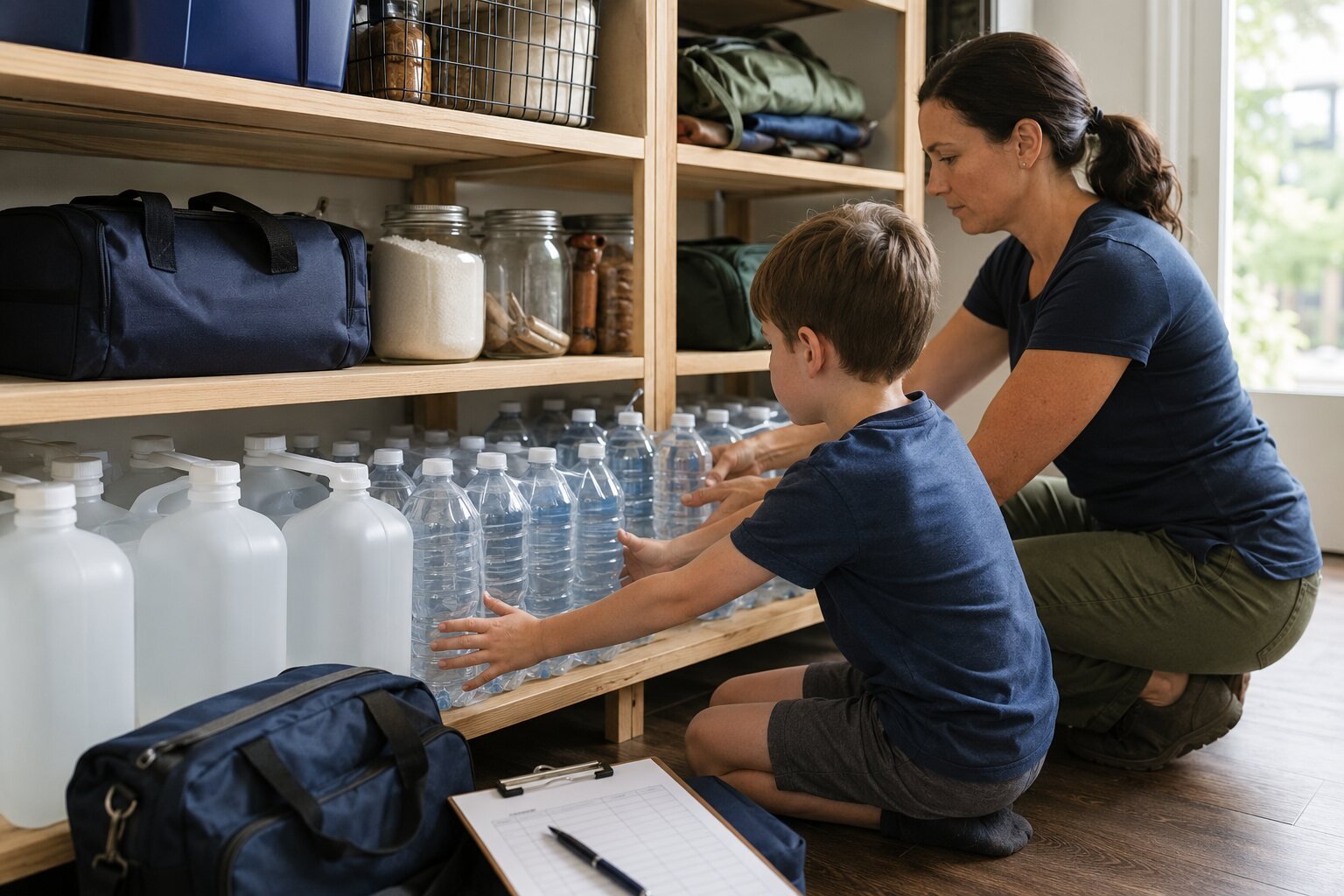
Emergency water storage in a small apartment works best when you plan the locations before buying the containers. Start with a manageable reserve, keep it accessible, and use several suitable spots rather than trying to fit one large tank into your home.
1. Set a realistic first target
The CDC recommends at least one US gallon per person per day for three days, working toward two weeks if possible. Allow extra for pets, heat, pregnancy, illness, and other needs.
For two people, the three-day baseline is six US gallons, about 22.7 liters. For four people, it is twelve US gallons, about 45.4 liters. These are storage totals, not instructions for how much an individual should drink. Our water quantity guide explains how to build a larger reserve.
2. Measure the spaces you can actually use
Take a tape measure around your apartment. Note the width, depth, and height of each candidate space, including the clearance needed to lift a bottle out. A container that fits through a cupboard door may still be awkward to remove when full.
- A cool interior closet: reserve a low, accessible area and keep the water separate from household chemicals.
- Under a bed: consider this only if sealed containers can remain upright as designed and slide out without catching or damaging their caps. Check for leaks regularly.
- A pantry: choose a location away from the oven, radiators, and sunlight. Confirm that any shelf can support the filled load.
These are possible arrangements, not guarantees that every cupboard or piece of furniture is suitable. Keep exits, walking routes, and access to electrical equipment clear. Avoid placing a large concentrated load on furniture or flooring without confirming its suitability; ask building management about any uncertainty.
3. Choose containers you can handle
Unopened commercially bottled water is the CDC’s preferred emergency source. For water you fill yourself, choose food-grade containers with tight lids; never reuse containers that held toxic chemicals. Follow CDC cleaning and sanitizing instructions before filling.
Imagine using the container during an outage: can you bring it forward, open it, and pour without lifting it above your waist? Smaller containers may be more practical when carrying a large one would be difficult. Compare sizes and filled weights in our water-storage container guide.
Only stack containers when their manufacturer permits it, and follow its stacking limits. A flat top does not establish that a container can safely bear another full container.
4. Make a simple storage map
Here is an illustrative six-gallon layout for two people’s three-day baseline:
- Two one-gallon containers in a suitable low closet space.
- Two one-gallon containers in another suitable indoor location.
- Two one-gallon containers in an accessible pantry location.
The point is to divide the reserve into manageable units. Adapt the layout to your apartment and add the separate allowance your household needs. Record each location and quantity in the calculator’s printed log. Let everyone who may need the water know where to find it.
5. Keep the reserve easy to maintain
CDC guidance calls for cool storage, away from sunlight and toxic substances. Label self-filled containers with the filling date and replace that water every six months. Follow package dates for purchased water.
Put the next check on your calendar. When you use a bottle during everyday life, add its replacement to your shopping list immediately. Keep the log honest: count the water currently available, not the empty containers waiting to be refilled.
What if the tap water becomes unsafe?
Follow the notice issued by your water supplier or local authorities. Our emergency water-treatment guide explains treatment options and their limits. A filter is not a substitute for having a ready-to-use reserve.
For the rest of your household supplies and evacuation planning, use our apartment preparedness guide.
Do this today: calculate your first target, measure two possible storage spaces, and choose a container you can safely handle.
Source
CDC: How to Create an Emergency Water Supply (June 27, 2025). Guidance checked September 13, 2026. Layout examples are suggestions to adapt to your home; follow local emergency instructions.